Industrial Safety Equipment Supplier: A Guide to Workplace Safety Products
Industrial workplaces involve a wide range of activities, machinery, tools, chemicals, electrical systems, and operational processes. Because of these conditions, businesses need appropriate safety equipment to help reduce workplace risks and protect employees.
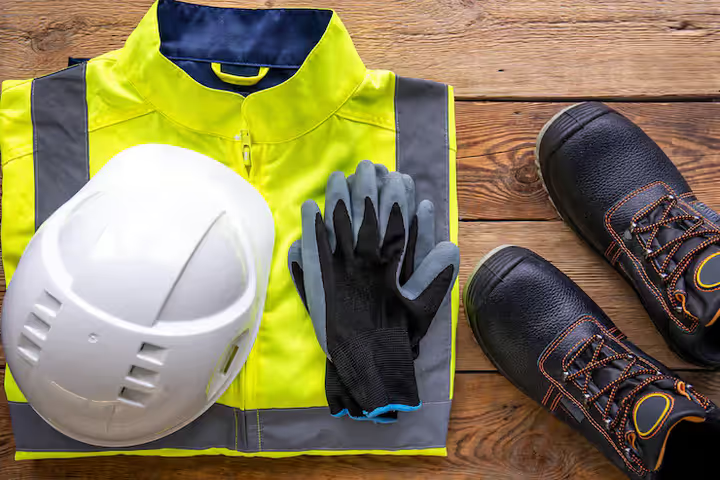
An industrial safety equipment supplier provides products such as personal protective equipment (PPE), respiratory protection, fall protection systems, protective clothing, safety footwear, eye protection, hearing protection, and workplace safety accessories.
Choosing suitable safety equipment involves more than simply purchasing products. Businesses should understand workplace hazards, applicable safety requirements, product specifications, maintenance procedures, and employee training needs.
What Is an Industrial Safety Equipment Supplier?
An industrial safety equipment supplier is a company that provides safety products and related equipment for industrial, commercial, construction, manufacturing, warehouse, and other working environments.
Suppliers may offer individual products or complete safety equipment solutions based on workplace requirements.
Common Products Offered by Safety Equipment Suppliers
Industrial safety suppliers may provide:
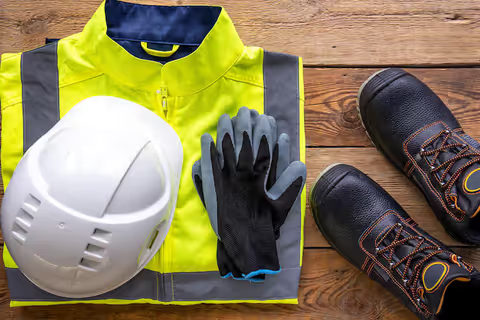
- Safety helmets and hard hats
- Safety glasses and goggles
- Face shields
- Protective gloves
- Safety footwear
- High-visibility clothing
- Protective workwear
- Hearing protection
- Respiratory protection equipment
- Fall protection equipment
- Safety harnesses
- Gas detection equipment
- Emergency eyewash stations
- Spill control products
- Lockout/tagout equipment
- Warning signs and safety barriers
- First-aid supplies
- Fire safety accessories
The products required depend on the specific hazards and working conditions present at a facility.
Why Industrial Safety Equipment Matters
Workplace safety equipment is an important part of an organization's broader risk-management strategy. Appropriate protective equipment can provide a barrier between workers and certain workplace hazards.
However, PPE should generally be considered one component of a comprehensive safety program rather than the only method of controlling hazards.
Protecting Workers From Workplace Hazards
Industrial environments can expose workers to hazards such as:
- Flying particles
- Excessive noise
- Chemical splashes
- Dust and airborne contaminants
- Heat and cold
- Electrical hazards
- Sharp materials
- Slippery surfaces
- Falling objects
- Working at height
The appropriate equipment depends on the type and level of exposure.
Supporting Workplace Safety Programs
Safety equipment can complement engineering controls, administrative procedures, employee training, inspections, and emergency planning.
A well-designed safety program normally begins with identifying hazards and determining how those hazards can be eliminated or controlled.
Types of Industrial Safety Equipment
Different industries require different categories of protective equipment. Understanding the purpose of each category can help businesses make informed purchasing decisions.
Personal Protective Equipment
Personal protective equipment, commonly called PPE, is designed to protect workers from specific workplace hazards.
Common PPE categories include:
- Head protection
- Eye and face protection
- Hand protection
- Foot protection
- Hearing protection
- Respiratory protection
- Protective clothing
- Fall protection
Employers should select PPE according to the hazards identified in their workplace and applicable regulations.
Respiratory Protection Equipment
Respiratory protection may be required in environments where workers could be exposed to harmful dust, fumes, vapors, gases, or other airborne contaminants.
Products can include different types of respirators and associated filters or cartridges.
Selection should be based on the contaminant, concentration, exposure conditions, equipment limitations, and applicable workplace requirements.
Fall Protection Equipment
Workers operating at elevated locations may face fall hazards. Fall protection systems can include:
- Full-body harnesses
- Lifelines
- Anchorage systems
- Lanyards
- Self-retracting lifelines
- Guardrail systems
Businesses should ensure that fall protection equipment is properly selected, inspected, maintained, and used according to applicable requirements.
Eye and Face Protection
Safety glasses, goggles, and face shields can help protect workers from different eye and face hazards.
For example, manufacturing and machining operations may generate particles, while certain laboratory or industrial processes may involve chemical splashes.
The correct protection should match the specific hazard.
How to Choose an Industrial Safety Equipment Supplier
Selecting a supplier requires consideration of more than product price. Businesses should evaluate product suitability, documentation, quality, availability, and service.
Check Product Specifications
Review the product's specifications before purchasing. Important information may include:
- Intended application
- Material
- Size and fit
- Protection level
- Operating limitations
- Compatibility with other equipment
- Cleaning requirements
- Replacement requirements
- Applicable standards or certifications
Businesses should verify that the products meet the requirements relevant to their location and industry.
Evaluate Product Quality
Safety equipment is used in environments where product performance can be important. Buyers should consider manufacturers, product documentation, testing information, warranties where applicable, and supplier reputation.
Extremely low prices should not automatically be treated as evidence of good value if the equipment does not meet the required specifications.
Consider Availability and Supply Capacity
Industrial facilities may require regular replacement of consumable or wearable safety products.
A supplier should be evaluated on factors such as:
- Product availability
- Delivery capabilities
- Inventory levels
- Replacement product availability
- Bulk purchasing options
- Customer support
Reliable supply can help organizations maintain their workplace safety programs.
Industrial Safety Equipment Standards and Compliance
Safety requirements vary by country, industry, workplace, and type of equipment. Organizations should identify the regulations and standards that apply to their operations.
For example, businesses operating in the United States may need to consider requirements established by the Occupational Safety and Health Administration (OSHA) and relevant standards organizations.
Other countries have their own regulatory frameworks and certification requirements.
Why Compliance Information Matters
Compliance information can help businesses determine whether a particular product is appropriate for a specific application.
However, a product carrying a particular certification or standard does not necessarily mean it is suitable for every workplace situation. The equipment must still match the actual hazard and operating conditions.
Benefits of Working With a Professional Supplier
A knowledgeable safety equipment supplier can provide more than products.
Product Selection Assistance
Businesses may need help comparing different equipment types, materials, protection levels, and specifications.
A supplier familiar with industrial applications can help buyers understand product differences and identify options that correspond with their stated requirements.
Bulk and Recurring Orders
Manufacturing plants, warehouses, construction companies, and other organizations may purchase safety equipment regularly.
Suppliers that support bulk and recurring orders can make procurement easier and help businesses maintain adequate inventory.
Technical Product Information
Good product documentation can help purchasing teams and safety professionals understand how equipment should be used, stored, inspected, and maintained.
High-Value Industrial Safety Equipment Categories
Businesses searching for safety products may encounter a broad range of commercially important categories.
Some commonly searched categories include:
- Industrial PPE suppliers
- Workplace safety equipment
- Personal protective equipment suppliers
- Safety gloves suppliers
- Industrial safety helmets
- Respiratory protection equipment
- Fall protection systems
- Safety footwear suppliers
- Protective workwear
- Industrial eye protection
- Hearing protection equipment
- Gas detection systems
- Workplace safety products
- Construction safety equipment
- Manufacturing safety equipment
These terms can be incorporated naturally into educational content without making unsupported claims about particular suppliers or products.
Safety Equipment Maintenance and Inspection
Purchasing appropriate equipment is only one part of workplace safety. Equipment may need regular inspection, cleaning, storage, maintenance, and replacement.
Inspect Equipment Regularly
Workers and supervisors should follow applicable inspection procedures for safety equipment.
Equipment showing signs of damage, excessive wear, contamination, or other problems may need to be removed from service according to the manufacturer's instructions and workplace procedures.
Store Products Correctly
Improper storage can affect certain types of safety equipment. Products should be stored according to manufacturer recommendations and protected from conditions that could damage them.
Replace Damaged Equipment
Damaged or expired equipment should not be used simply because it is still physically present in the workplace.
Replacement schedules can vary significantly depending on the product, manufacturer, usage conditions, and applicable requirements.
Employee Training and Proper Equipment Use
Even well-designed safety equipment may not provide its intended protection if workers do not know how to use it correctly.
Training can cover:
- When PPE is required
- How to put equipment on correctly
- Proper fitting and adjustment
- Equipment limitations
- Cleaning and storage
- Inspection procedures
- Replacement requirements
- Emergency procedures
For specialized equipment, training should follow applicable regulations and manufacturer instructions.
Common Mistakes When Buying Industrial Safety Equipment
Businesses can avoid many purchasing problems by evaluating requirements before placing an order.
Choosing Products Based Only on Price
The cheapest product may not provide the specifications, durability, compatibility, or protection required for a particular application.
Buying Without a Hazard Assessment
Different workplaces have different risks. Selecting equipment without understanding the hazards can result in inappropriate protection.
Ignoring Fit and Comfort
Equipment that does not fit correctly may be uncomfortable or difficult to use consistently. Fit can be particularly important for products such as respirators, protective footwear, gloves, and fall protection equipment.
Failing to Consider Replacement Needs
Some safety products are consumable or have defined service lives. Procurement planning should account for replacement requirements and inventory levels.
Questions to Ask an Industrial Safety Equipment Supplier
Before purchasing safety equipment, businesses can ask suppliers:
- What hazards is this product designed to address?
- What are the product's specifications?
- What standards or certifications apply?
- What sizes and configurations are available?
- How should the product be inspected?
- How should it be cleaned and stored?
- What are its limitations?
- Are replacement components available?
- Is technical documentation provided?
- Is the product appropriate for the intended workplace application?
These questions can help purchasing teams compare products more effectively.
Conclusion
An industrial safety equipment supplier plays an important role in helping businesses obtain protective products for industrial and workplace applications. From PPE and protective clothing to fall protection, respiratory equipment, eye protection, and safety accessories, the appropriate equipment depends on the hazards and conditions of each workplace.
Businesses should evaluate products based on their intended use, specifications, applicable standards, quality, fit, availability, maintenance requirements, and employee training needs.
Most importantly, safety equipment should form part of a broader workplace safety program that includes hazard identification, engineering controls, safe operating procedures, training, inspections, and emergency planning.
Frequently Asked Questions
What does an industrial safety equipment supplier provide?
An industrial safety equipment supplier may provide PPE, safety footwear, protective clothing, respiratory protection, fall protection, eye protection, hearing protection, gas detection equipment, and other workplace safety products.
How do I choose the right safety equipment?
Start by identifying the workplace hazards and applicable requirements. Then compare equipment specifications, protection levels, fit, compatibility, manufacturer instructions, and relevant standards.
Is PPE enough to protect workers?
PPE is an important safety measure, but it should generally be used as part of a broader hazard-control program. Eliminating or reducing hazards through engineering and administrative controls should also be considered.
How often should safety equipment be replaced?
Replacement requirements vary by product and usage conditions. Follow the manufacturer's instructions, applicable regulations, inspection procedures, and workplace safety policies.
Why is employee training important?
Training helps workers understand when and how safety equipment should be used, including proper fitting, inspection, limitations, cleaning, storage, and replacement procedures.