Industrial Grade Adhesives: Types, Applications, Benefits, and Selection Guide
Industrial grade adhesives are specialized bonding materials designed to join components used in manufacturing, construction, automotive, electronics, packaging, aerospace, and other industrial applications. Unlike general-purpose glues, these adhesives are formulated to withstand demanding conditions such as vibration, temperature changes, moisture, chemicals, and mechanical stress.
This guide explains the major types of industrial adhesives, their applications, advantages, selection factors, and important considerations for businesses evaluating bonding solutions.
What Are Industrial Grade Adhesives?
Industrial grade adhesives are high-performance bonding products developed for professional and manufacturing environments. They can bond materials such as metals, plastics, rubber, glass, ceramics, composites, and wood.
Depending on the formulation, an industrial adhesive may provide structural strength, flexibility, electrical insulation, resistance to heat or chemicals, or protection against environmental exposure.
The appropriate adhesive depends on the materials being joined and the conditions under which the finished product will operate.
Why Industrial Adhesives Matter in Manufacturing
Adhesive bonding has become an important alternative or complement to traditional joining methods such as welding, screws, rivets, and mechanical fasteners.
Improved Manufacturing Efficiency
Adhesives can simplify assembly processes by reducing the need for drilling, fastening, or additional mechanical components. Automated adhesive dispensing equipment can also support consistent application in high-volume manufacturing.
Lightweight Product Design
Traditional fasteners can add weight to finished products. Adhesive bonding can sometimes reduce the number of mechanical components, which is particularly useful in transportation, electronics, and advanced manufacturing.
Stress Distribution
A bonded joint can distribute loads across a larger surface area instead of concentrating stress around individual screws or rivets. This can be useful when joining thin or delicate materials.
Improved Appearance
Adhesives can create clean joints without visible screws, bolts, or weld marks. This can be important for consumer products, architectural components, appliances, and finished surfaces.
Major Types of Industrial Grade Adhesives
Different adhesive technologies are designed for different industrial requirements.
Epoxy Adhesives
Epoxy adhesives are widely used for applications requiring strong and durable bonds. They can bond metals, ceramics, composites, plastics, and other substrates.
Depending on the formulation, epoxy adhesives can offer good resistance to heat, moisture, chemicals, and mechanical stress.
Common applications include:
- Industrial equipment assembly
- Metal bonding
- Electronics manufacturing
- Automotive components
- Composite structures
- Machinery repair and maintenance
Polyurethane Adhesives
Polyurethane adhesives are known for their flexibility and ability to bond different types of materials. They can accommodate movement and vibration better than some rigid adhesive systems.
They are commonly used in construction, transportation, woodworking, furniture manufacturing, and composite applications.
Cyanoacrylate Adhesives
Cyanoacrylate adhesives, sometimes called instant adhesives, cure rapidly when suitable surfaces are brought together.
They are frequently used for small components, precision assembly, electronics, rubber, plastics, and certain metal applications.
Because curing happens quickly, proper surface preparation and positioning are important.
Acrylic Adhesives
Acrylic adhesives can provide strong bonding performance and good resistance to environmental conditions. Structural acrylic systems are often used where manufacturers need reliable bonding with relatively fast processing.
Typical applications include transportation equipment, industrial assemblies, signage, plastics, and composite materials.
Silicone Adhesives
Silicone-based adhesives and sealants are valued for flexibility and resistance to temperature and environmental exposure.
They are commonly used in electronics, appliances, glazing, electrical assemblies, and applications requiring both bonding and sealing.
Hot Melt Adhesives
Hot melt adhesives are solid at room temperature and are melted before application. They solidify as they cool.
They are widely used in packaging, product assembly, woodworking, textiles, labeling, and consumer goods manufacturing.
Anaerobic Adhesives
Anaerobic adhesives cure when oxygen is excluded and the adhesive is confined between suitable metal surfaces.
They are commonly used for threadlocking, retaining cylindrical components, and sealing threaded or close-fitting metal assemblies.
Industrial Adhesive Applications
Industrial adhesives are used across a wide range of sectors.
Automotive Manufacturing
Automotive manufacturers use adhesives for interior components, trim, panels, lighting assemblies, glass-related applications, and structural components.
Adhesive bonding can help manufacturers reduce weight while maintaining required assembly performance.
Aerospace Manufacturing
Aerospace applications can require adhesives with carefully controlled mechanical, thermal, and environmental properties. Specialized formulations may be used for composite structures, interior components, insulation, and other assemblies.
Material compatibility, certification requirements, and quality control are especially important in aerospace manufacturing.
Electronics Industry
Electronics manufacturers use adhesives for component assembly, insulation, encapsulation, thermal management, and protection against environmental conditions.
Adhesive selection can depend on electrical properties, curing requirements, temperature resistance, and compatibility with sensitive components.
Construction and Building Products
Construction applications can include flooring, insulation, panels, architectural components, glazing, and various installation systems.
Some construction adhesives are formulated to provide both bonding and sealing properties.
Packaging Manufacturing
Adhesives play an important role in cartons, labels, flexible packaging, corrugated boxes, and product assembly.
High-speed packaging lines may require adhesives with specific setting speeds and dispensing characteristics.
Machinery and Equipment
Manufacturers use industrial adhesives for equipment assembly, component retention, sealing, vibration management, and maintenance applications.
Choosing the right product can depend on operating temperature, load, chemical exposure, and substrate compatibility.
Key Factors When Selecting an Industrial Adhesive
Selecting an adhesive based only on its advertised strength can lead to poor results. The complete application should be evaluated.
Substrate Compatibility
First identify the materials being bonded. Metal, plastic, glass, rubber, wood, and composite materials can have very different surface characteristics.
Some materials may also require primers or specialized surface treatment.
Bond Strength
Consider the type of load placed on the joint.
Important load types include:
- Tensile loads
- Shear loads
- Peel loads
- Impact loads
- Compression loads
- Vibration-related loads
The strongest adhesive on paper is not necessarily the best choice for every application.
Temperature Resistance
Manufacturing environments may involve significant temperature variation. The adhesive should be suitable for both normal operating temperatures and expected temperature extremes.
Chemical Resistance
If a bonded assembly will contact oils, fuels, solvents, cleaning agents, water, or other chemicals, chemical resistance should be evaluated before selecting an adhesive.
Curing Time
Production requirements can make curing speed an important consideration. Fast-curing adhesives may support rapid assembly, while slower systems can provide more working time for positioning and adjustment.
Flexibility
Some joints need to tolerate movement, vibration, thermal expansion, or impact. Flexible adhesive technologies may be more suitable than rigid systems in these situations.
Surface Preparation
Even a high-performance adhesive may fail if surfaces are contaminated or improperly prepared.
Depending on the adhesive, preparation can include:
- Cleaning the surfaces
- Removing oil and dust
- Abrading suitable substrates
- Applying a primer when required
- Allowing surfaces to dry
- Following the manufacturer's application instructions
Industrial Adhesive Bonding Process
A consistent bonding process is important for manufacturing quality.
Step 1: Identify the Materials
Determine the exact substrates, surface coatings, and finishes involved.
Step 2: Evaluate the Environment
Consider temperature, humidity, chemicals, UV exposure, vibration, and mechanical loads.
Step 3: Prepare the Surfaces
Clean and prepare surfaces according to the adhesive manufacturer's recommendations.
Step 4: Apply the Adhesive
Use the correct dispensing method and application quantity. Automated dispensing systems can improve consistency in high-volume production.
Step 5: Position and Secure
Align the components correctly and maintain the required contact during the initial curing period.
Step 6: Allow Proper Curing
Curing conditions vary by adhesive technology. Temperature, humidity, time, and joint design can affect final performance.
Advantages of Industrial Grade Adhesives
Industrial adhesives can provide several benefits when correctly matched to an application.
Reduced Use of Mechanical Fasteners
Adhesive bonding can reduce or eliminate some screws, bolts, rivets, and other fastening components.
Better Design Flexibility
Adhesives can bond irregular shapes and different materials that may be difficult to join using conventional fastening techniques.
Protection Against Environmental Exposure
Certain adhesive systems can help seal joints against moisture, dust, and other environmental factors.
Potential Production Cost Savings
For suitable applications, simplified assembly and automated dispensing can contribute to lower manufacturing labor and processing costs.
However, actual savings depend on equipment, production volume, material costs, curing requirements, and quality-control processes.
Industrial Adhesives and Automation
Modern manufacturing increasingly combines adhesive technology with automated dispensing systems.
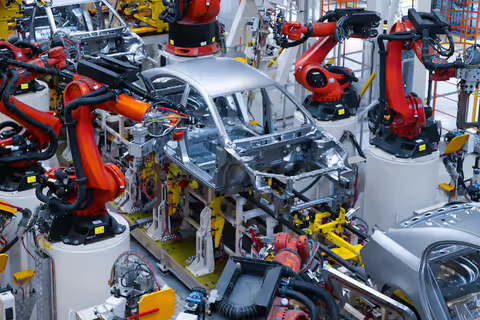
Robotic and computer-controlled dispensing equipment can regulate adhesive volume, application location, and process consistency. This can be valuable for high-volume production where repeatability is important.
Automation can also help reduce material waste and improve process monitoring when properly configured.
Adhesive Quality and Industry Standards
Industrial buyers should consider technical documentation and applicable industry requirements before purchasing an adhesive.
Important information may include:
- Technical data sheets
- Safety data sheets
- Cure specifications
- Temperature ratings
- Chemical resistance information
- Shelf-life information
- Storage requirements
- Substrate compatibility
- Quality certifications
- Applicable industry standards
Requirements can vary significantly between industries, so manufacturers should verify the standards relevant to their specific application.
Safety Considerations for Industrial Adhesives
Industrial adhesives can contain chemicals that require appropriate handling.
Workers should follow the product's safety documentation and workplace procedures. Depending on the formulation, appropriate ventilation, protective equipment, storage controls, and spill-management procedures may be necessary.
Always review the manufacturer's Safety Data Sheet (SDS) before handling an industrial adhesive.
Adhesives should also be stored according to the manufacturer's temperature, humidity, and shelf-life recommendations.
How to Improve Adhesive Bond Performance
Several factors can influence the long-term performance of a bonded joint.
Use the Correct Adhesive
Select a formulation designed for the specific materials and operating environment.
Maintain Consistent Application
Control adhesive quantity, bead size, placement, and dispensing speed.
Control Surface Contamination
Oil, dust, moisture, oxidation, and other contaminants can reduce bond quality.
Optimize Joint Design
Joint geometry can have a significant influence on how forces are transferred through the adhesive.
Validate Before Production
Manufacturers should conduct appropriate testing before introducing a new adhesive into large-scale production.
Testing can evaluate strength, temperature performance, aging, chemical resistance, and other application-specific requirements.
Industrial Adhesive Market Considerations
Demand for industrial adhesives is influenced by trends in advanced manufacturing, lightweight product design, electronics production, automotive manufacturing, construction, packaging, and renewable-energy equipment.
Manufacturers are also exploring adhesive technologies that support faster processing, improved durability, reduced material usage, and more sustainable production practices.
For procurement teams, the total cost of an adhesive should be considered rather than focusing only on the purchase price. Application equipment, labor, curing time, waste, storage, maintenance, and production efficiency can all influence the overall cost of bonding.
Frequently Asked Questions
What is an industrial grade adhesive?
An industrial grade adhesive is a bonding material formulated for professional manufacturing, assembly, construction, maintenance, or engineering applications where performance requirements are generally more demanding than those of household adhesives.
Which industrial adhesive is strongest?
There is no single adhesive that is strongest for every application. Epoxy, acrylic, polyurethane, and other technologies can provide high bond strength under different conditions. The appropriate choice depends on the substrates, loads, temperature, chemicals, flexibility requirements, and curing process.
Can industrial adhesives bond metal?
Yes. Several industrial adhesive technologies can bond metals, including epoxy, acrylic, polyurethane, and anaerobic adhesives. Surface preparation and material compatibility are important for achieving reliable results.
How long do industrial adhesives last?
Service life depends on the adhesive chemistry, joint design, substrates, environmental exposure, temperature, mechanical loads, and application quality. Manufacturers should use technical data and application-specific testing to estimate expected service performance.
Are industrial adhesives waterproof?
Some industrial adhesives provide excellent water or moisture resistance, while others are not intended for prolonged exposure. The product's technical documentation should be checked before using an adhesive in wet or outdoor environments.
Conclusion
Industrial grade adhesives are an important part of modern manufacturing and assembly. They can support lightweight designs, simplify production, bond different materials, and provide resistance to environmental and mechanical stresses.
The best adhesive is not necessarily the product with the highest advertised strength. Material compatibility, joint design, environmental conditions, curing requirements, surface preparation, safety, and production processes should all be considered.
Businesses evaluating industrial bonding solutions should review technical and safety documentation, conduct application-specific testing, and follow the manufacturer's recommendations before adopting an adhesive for production use.